
How Local SEO Increased Qualified Leads by 240 Percent in a Competitive Metro Market
A regional home services company serving multiple cities across a highly competitive metro area approached Rank AI Digital after experiencing a sustained decline in inbound calls. Over 70 percent of their new customers originated from search discovery. When their visibility in Google Maps declined, revenue followed. Over an 8 month engagement, we rebuilt their local authority system from the ground up and restored predictable, qualified lead flow.
View Full Performance Breakdown+240%
Qualified Leads
-61%
Cost Per Lead
+312%
Map Impressions
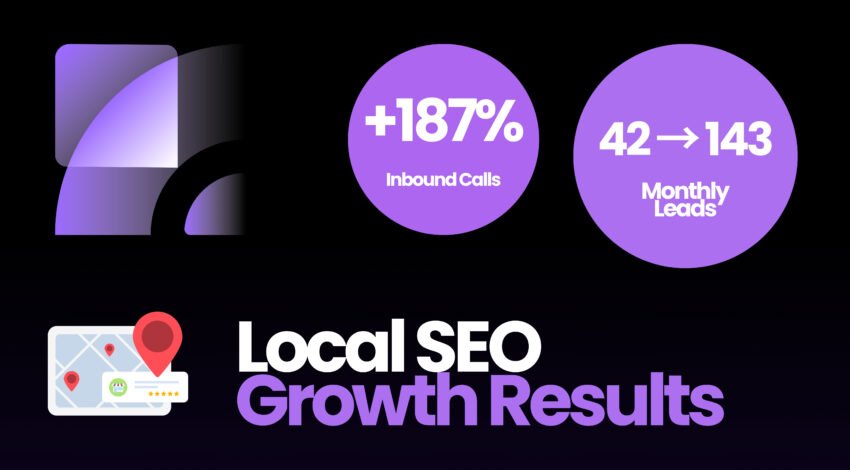
+187%
Inbound Calls
The Business Problem
The company had invested in website updates and directory listings for more than a year. Despite steady marketing spend, inbound calls were dropping. Quarterly reporting showed two consecutive months of decline. Internal tracking revealed that more than 70 percent of new customers discovered the brand through search. That meant every lost map position directly affected revenue.
Competitors with stronger Google Business Profile authority and more structured local content consistently occupied the Google Maps Top 3. The client was visible, but not competitive. Their service pages targeted broad generic keywords instead of city level buyer intent. Citation consistency was fragmented. No structured data was deployed. Internal linking diluted authority rather than consolidating it.
This was not a traffic issue. It was a local authority and intent alignment issue. We approached the project as a full Local SEO and Google Maps Optimization rebuild, not a minor ranking adjustment.
Starting Performance Snapshot
At the beginning of the engagement, measurable weaknesses were identified:
- Not appearing in Google Maps for primary service area searches
- Ranking page 3 to 4 for core service plus city keyword combinations
- Low review velocity compared to top competitors
- No local business schema markup implementation
- Weak internal linking structure and diluted location authority
We validated baseline performance using call tracking, CRM data, and Google Analytics 4 assisted conversion modeling. This ensured accurate before and after comparisons.
The Turning Point
Before
- Minimal map visibility
- Declining inbound call volume
- Generic service pages
- Unstructured review process
- Fragmented citation signals
After
- Consistent Google Maps Top 3 visibility
- Stable month over month lead growth
- City specific landing page authority
- Structured review acquisition workflow
- Consolidated internal authority flow
Performance Growth Over 8 Months
Cost per lead decreased from 118 dollars to 46 dollars as organic demand replaced paid acquisition dependency. Branded search volume increased by 68 percent, indicating stronger local recognition. Map impressions increased by 312 percent during the measurement period.
How Local SEO Increased Qualified Leads
Local SEO increases qualified leads by aligning service pages, business listings, and technical signals with high intent geographic search queries. When a user searches for a service plus a city, Google prioritizes proximity, relevance, and authority signals. Optimizing these signals improves visibility in Google Maps and localized organic results.
We rebuilt keyword architecture around city and neighborhood intent rather than broad volume terms. This approach aligned content with real buyer behavior. Structured data implementation followed guidance from Google Search Central documentation, reinforcing entity clarity and business relevance.
Review velocity was systematized. Instead of passive review collection, a structured workflow encouraged satisfied customers to leave feedback. This improved both ranking stability and conversion trust signals.
Conversion path optimization was executed through our Website Structure and Conversion Optimization framework. Mobile click to call placement was prioritized. Form friction was reduced. Trust signals were positioned above the fold on high intent landing pages.
Content expansion followed a structured Content Strategy and Creation roadmap, building topical depth across service areas. This reinforced local authority across multiple semantic layers.
Who This Strategy Is Designed For
Multi Location Service Businesses
Brands operating across competitive metro markets that depend on inbound calls.
Businesses Losing Map Visibility
Companies pushed below the Top 3 in Google Maps for high intent searches.
Organizations Overpaying for Paid Ads
Companies seeking to reduce blended acquisition cost through organic demand.
Brands Seeking Predictable Growth
Leadership teams looking for stable, measurable inbound lead systems.
Frequently Asked Questions
How long does local SEO take to show measurable results?
In competitive metro markets, initial movement is typically observed within 8 to 12 weeks. Sustainable and compounding results generally require 6 to 9 months of structured implementation.
What factors influence Google Maps rankings?
Primary business category alignment, proximity signals, review velocity, citation consistency, local content depth, and engagement signals all contribute to ranking stability.
Does local SEO reduce cost per lead?
Yes. As organic visibility increases, reliance on paid traffic decreases. This lowers blended cost per acquisition and improves marketing efficiency.
Is local SEO different from traditional SEO?
Yes. Local SEO focuses on geographic intent signals, map visibility, and business listing optimization. Traditional SEO often targets broader national keyword rankings.
Ready to Build a Predictable Local Lead System
If competitors dominate your map pack positions, the issue is not effort. It is structure. Let’s evaluate your visibility, authority signals, and conversion paths.
Request Local Visibility Audit