Google Maps Optimization | GBP Strategy | Local Lead Generation
How Google Maps Optimization Increased Inbound Calls by 178% and Generated $55K Monthly Revenue
A mid-sized home service company operating in a competitive metro market relied on word of mouth and paid advertising for the majority of new business. They had an existing Google Business Profile but it was under-optimized, inconsistent, and not driving predictable inbound calls.
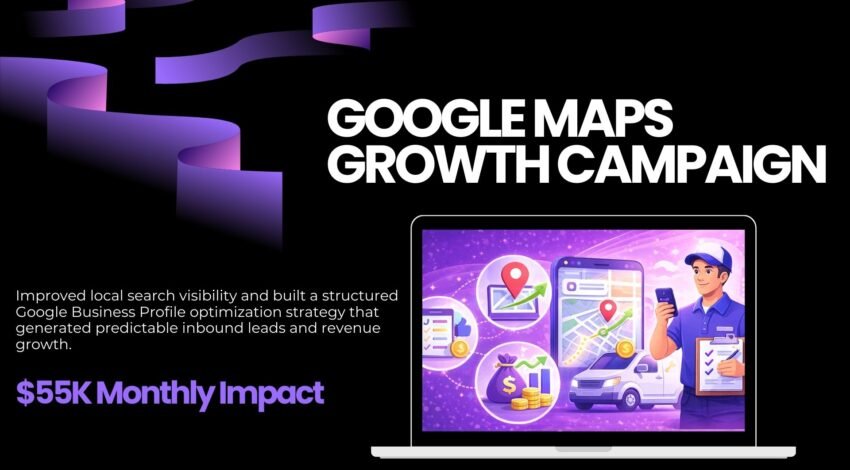
Competitors with stronger local signals dominated the Map Pack for every high-intent service search the business depended on. Rank AI Digital built a structured Google Maps optimization and reputation velocity strategy that delivered stable Top 3 visibility, a 178% increase in inbound calls, and an estimated $55,000 monthly pipeline impact within 6 months.
Why a Business with Strong Service Quality Was Invisible in Google Maps
The company delivered high-quality residential services with an average job value of $1,150, but customers searching for those services in Google Maps rarely saw them.
Monthly calls from Google Maps averaged 64, far below what the local search volume in the market should have been producing.
The root problem was not service quality or brand recognition. The Google Business Profile was not communicating enough confidence signals to Google for the business to be consistently surfaced in competitive local searches.
Core Problems Identified
- Only 6 business photos live on the profile
- Missing service descriptions and incorrect category structure
- Inconsistent service area signals
- Only 32 reviews vs competitors averaging 180+
- Review response rate under 20%
- No structured posting cadence
- No call attribution tracking
Project Goals
- Achieve stable Top 3 Map Pack visibility across core service zones
- Increase inbound calls from Google Maps
- Build a repeatable review acquisition system
- Install call attribution tracking
Strategy and Implementation
Phase 1: GBP Foundation Rebuild (Weeks 1 to 3)
Category stack rebuilt, service descriptions rewritten, NAP signals standardized, service catalog added, and service areas structured.Phase 2: Visual Trust and Geo Authority (Weeks 3 to 8)
42 geo-relevant project photos uploaded with team and vehicle imagery. Weekly photo publishing implemented.Phase 3: Review Velocity System (Weeks 4 to 16)
Automated SMS review request workflow deployed with reminder sequences and structured responses.Phase 4: Call Attribution and Conversion Tracking (Weeks 6 to 20)
GBP call tracking number installed to isolate Maps calls and connect them with CRM pipeline modeling.Project Results
Visibility Results
| Metric | Before | After | Change |
|---|---|---|---|
| Map Pack Position | 6 to 12 | Stable Top 3 | Stabilized |
| Service Area Visibility | 22% | 71% | +223% |
| Monthly Discovery Searches | Baseline | Strong Growth | +148% |
Call and Reputation Results
| Metric | Before | After | Change |
|---|---|---|---|
| Monthly Maps Inbound Calls | 64 | 178 | +178% |
| Total Review Count | 32 | 224 | +600% |
| Review Response Rate | 18% | 100% | Full Coverage |
Revenue pipeline modeling shows that 178 Maps calls per month multiplied by a 42% close rate and an average job value of $1,150 produces an estimated $55,000 monthly pipeline influence from Google Maps visibility alone.
Operations Manager, Home Service Company
Key Strategic Learnings
Review Velocity Beat Review Volume
The client gained ranking advantage by accelerating review frequency rather than matching competitor review totals.
Geo-Relevant Media Increased Trust
Real project photos from service zones produced higher engagement signals.
Profile Completeness Improved Entity Confidence
Consistent service data and accurate categories improved Google’s classification confidence.
Response Consistency Is a Competitive Advantage
Moving from an 18% response rate to 100% improved trust signals.
Posting Cadence Reinforces Active Signals
Two posts per week maintained engagement signals between review cycles.
Increase Local Calls with Google Maps Optimization
If competitors dominate your Map Pack rankings, a structured Google Maps optimization strategy can dramatically increase inbound calls and local visibility.
Request Google Maps Visibility AuditRevenue pipeline figures are modeled estimates based on call tracking volume and CRM close rate data. Results vary by market competition and implementation speed.